






The Best Promise — Consider it Done.
OUTCOME
CERTAINTY
We don't leave site until the job is done. First-visit resolution is a standard we never compromise. You're only ever charged when the outcome is achieved.
COST
CERTAINTY
EXPERIENCE
CERTAINTY
Your customer’s experience matters to us as much as it does to you. A directly employed Best engineer delivers under your brand and to your standard.
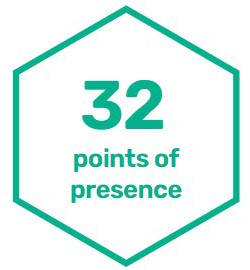
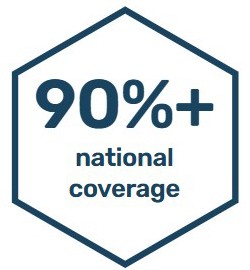
32 Points of presence · 90%+ National coverage · Nearly 25 years in field service
A partner with real scale.

























Three areas of excellence.





Best Perspective — our view on field services.

Your customer judges you by who turns up
By John McVicker, 17 November 2026
What to demand from your field partner
Recently a managed services provider told me about a contractor they used for site work in Melbourne. He was a sole trader, someone they called when a job needed hands on site. One day he went rogue in front of their customer.
The customer didn’t see a contractor behaving badly. They saw their IT provider. And the provider lost the customer.
I’ve heard versions of that story again and again this year. A global services company whose Australian suppliers kept missing SLAs because they relied on freelance engineers nobody could control. A field provider storing a retail customer’s equipment at a home address. A subcontractor whose hours didn’t add up. Different details, same lesson: your customer judges you by who turns up.
To your customer, whoever turns up is you
Your customer rarely sees your planning, your service desk or your escalation process. They only see the person at the door. For many, the engineer on site is the only person from your business they meet face to face.
TSIA, which benchmarks technology service organisations, calls field technicians “the front line of customer experience”. That’s accurate. The engineer shapes what your customer thinks of you, and what they’re willing to buy from you next.
Getting it wrong costs twice
The first cost is the relationship. Bain research on B2B loyalty found that loyalty leaders grow four to eight percentage points faster than their market. TSIA’s field service benchmark ties that loyalty to the site visit: a first-visit fix lifts satisfaction, satisfaction lifts renewals, and faster resolution lifts renewals too. As TSIA puts it, “You can’t renew, cross-sell, or upsell a dissatisfied customer.”
The second cost is margin. Aquant’s 2026 performance benchmarking looked at around 30 million service events across 161 service organisations. In the weakest fifth, failed visits consumed 44% of total service cost. In the strongest fifth, just 14%. The best fixed 88% of jobs first time and closed cases in two and a half days. The weakest fixed 60% and took ten.
Think about what sits behind those numbers. A second truck roll. Another day of disrupted operations for your customer. Another awkward call for your account manager. And the margin you priced in…gone.
No one publishes a figure that links Australian MSP renewals to field service. You don’t need one. Ask your account managers which customers went quiet after a visit that went badly.
How you outsource decides the outcome
None of this is an argument against outsourcing field work. National coverage, flexible capacity and no field team sitting idle are good reasons to do it. The risk is in how it’s done.
TSIA warns that outsourcing on cost alone tends to bring inconsistent service and poor outcomes for customers. In my experience, the cheapest rate per hour is rarely the cheapest outcome. When a provider bills by time on site, every overrun and every second visit lands back on you.
And your customer will find out that you outsource. They always do. When they ask the engineer, the right answer is an honest one: they’re there representing you. So choose a field partner you’d be proud to name.
What to demand from your field partner
This is the standard I’d hold any field partner to:
Directly employed engineers, working under your brand. People your field partner employs and trains, who know they’re on site to represent you.
They don’t leave site until the job is done. First-visit resolution is the standard, not a stretch target.
They escalate from site, not after they’ve left. The engineer calls your team on arrival, takes direction from you, and refers anything outside the job back to you.
Next business day nationally, as standard. Not just in the capitals, and not whenever someone becomes available.
An SLA that’s measured, not promised. Ask for the number and how it’s measured. A partner who can’t show you theirs doesn’t know it.
Status without chasing. You should be able to see where every job stands without picking up the phone.
A fixed cost per outcome. If time on site can change the bill, the risk sits with you. Pay for the job done, not the hours.
Why direct employment matters most
The first point on that list does the most work. A directly employed engineer has one employer, and that employer answers to you. They’re managed, trained and accountable. A good field partner gives them clear rules too: arrive on time, look the part, call your team as soon as they have access, and send any extra requests from your customer back to you. On scheduled visits, they work through a run sheet and leave with your customer’s sign-off.
A freelancer booked for the day may be excellent. But no one is managing them day to day. They choose which jobs to take, and nobody in the chain can tell you who will turn up, or how they’ll respond when your customer asks for something outside the ticket. In a busy week, a one-person business often can’t come at all. Freelance marketplaces have their place. Representing you in front of your best customers isn’t it.
So ask any field partner three questions. Who employs the engineer who will turn up? How long have they been working there? And who answers to you when something goes wrong?
Your customer won’t remember your service catalogue or your SLA. They’ll remember the person who turned up, and whether the problem was fixed when they left. Choose that person as carefully as you’d choose your own team. To your customer, they are your team.
About Best Technology Services. Australia’s channel-only field service partner, with 100 directly employed engineers and 32 Points of Presence. You’re only ever charged when the outcome is achieved. Fixed Cost · Guaranteed Outcomes · Consider It Done.
Sources
TSIA, Field Service Customer Experience (updated May 2026)
TSIA, Optimizing Service Delivery: Costs and Experience (September 2019)
Bain, Do Your B2B Customers Promote Your Business? (2014)
Aquant, 2026 Field Service KPI Benchmark (February 2026)
Are Your Regional On-Site Services Damaging Your Reputation and Margin?
By John McVicker
Most mid-market businesses run a two-tier service model without realising it. Metro customers get fast, predictable, well-priced delivery. Regional customers get something else — a longer wait, a higher cost, an inconsistent outcome, or all three. Reputation suffers. Margin suffers. The customer notices.
Anyone can service Sydney. The real test of a field service partner is whether they can deliver the same standard in Broken Hill as they can in Brisbane.
Subcontracting is usually the cause
Regional inconsistency almost always traces back to layers of subcontracting. Each layer takes a margin and dilutes the accountability. By the time the engineer arrives at the site, they may be three relationships removed from the partner who promised the outcome. That is not a model that scales — and it is not a model that protects the customer.
What to look for instead
Directly employed engineers. Not contractors, not subcontractors. One employer, one accountability line. We have a directly employed Best engineer in every metro and regional postcode, working from 32 Points of Presence across Australia and covering more than 90% of the population. In remote locations not served by a Best PoP, we work with trusted local agents held to the same outcome standard, and we are upfront about it.
NBD SLA with first-visit resolution. Regional customers should not be told “in five business days, maybe.” NBD is our standard, and the engineer does not leave until the outcome is delivered.
Real-time visibility. An integrated platform — BestConnect — so you can see case status, unit consumption, completion reports, all in one place, 24/7.
Fixed cost per outcome. The cost of a regional outcome should not be a guess. With BestCare, every outcome is one unit. One unit, one fixed cost, one guarantee.
Why this matters now
Customers are getting better at noticing the gap between metro and regional. They talk to other customers. They benchmark. The partners winning regional accounts in 2026 are the ones treating regional as a strength, not an add-on. The partners losing them are the ones still subcontracting their reputation.
Raise the bar. Pick the partner who treats Broken Hill the same way they treat Brisbane. Consider it done.

Getting On-Site Services Right the First Time
By John McVicker
If you have ever sent an engineer to a remote site only to find out they cannot complete the job, you already know the cost. The travel back, the second booking, the customer chasing you for a date, the margin disappearing into accommodation and flights. Multiply that across a multi-site rollout and the project starts to bleed.
First-visit success is not a target for us. It is the standard. Three things make it real.
1. Right skills, right time
A site is only as good as the engineer standing on it. On large multi-site projects, missing a single licence or skill on day one creates a cascading delay that runs through the rest of the program. Our directly employed engineers carry the certifications partners actually need on the day: cabling licences, working at heights, CM3 for high-risk works, and the relevant vendor accreditations. Multi-skilled by design, so the engineer who arrives can finish what they started.
2. Reduced travel time
Australia is large and unforgiving. A return trip to a regional site is rarely just a return trip. It means flights, accommodation, vehicle hire, and a day or two of lost productivity. We run 32 Points of Presence across the country, with a 200km single-day travel radius from each PoP, so we cover more than 90% of the Australian population with directly employed engineers. The job gets done close to home.
3. The right partner
Partners do not want a contractor. They want a delivery partner who shares the risk of getting it wrong. Our model is built around that. Fixed cost per outcome. NBD SLA standard. You’re only ever charged when the outcome is achieved. We absorb the delivery risk, you keep the margin.
How this works in practice
BestCare is the simplest expression of the model. You pre-buy a pack of BestCare units and redeem them as you need them. Each unit buys one guaranteed outcome (an installation, a break-fix, a site signoff) at a fixed cost, with NBD SLA standard. The quote is the invoice, and you’re only ever charged when the outcome is achieved. No timesheets. No purchase orders per call. No invoice disputes.
Minimising multiple call-outs is not a nice-to-have. It is the difference between a profitable rollout and one that quietly erodes margin. Pick the partner who treats it that way.
Consider it done.